


Summary of the Medical Imaging Compensation Review
This report analyzes full‑time medical imaging job requisitions obtained by RSG Health Services between January 1, 2025, and December 31, 2025. The analysis focuses on base wage data for permanent positions across major ARRT modalities. These included radiography, CT, MRI, mammography, nuclear medicine, and interventional radiology, as well as ARDMS specialties including general ultrasound, vascular, and echocardiography. Approximately 79% of roles represented hospital‑based positions, with the remaining 21% being outpatient imaging centers, ER’s, and other facilities offering imaging services.
All compensation figures represent only the base hourly wage provided by employers during the recruitment process. Data excludes overtime, shift differentials, bonuses, and contract traveler pay in order to provide a clearer benchmark for permanent employment. Outlier values were removed as an effort to ensure more accurate averages.
Compensation seems to be stabilizing across much of the United States. Following several years of double-digit wage growth, recent trends indicate that increases in pay are beginning to plateau.
Recruitment incentives including relocation assistance and bonuses remain common tools for attracting talent. While these incentives have long been part of healthcare recruitment, the amounts offered have increased significantly in recent years due to ongoing workforce shortages. While it is common to see bonuses in the $5,000 to $10,000 range, in some areas of the U.S., we have seen hiring bonuses as high as $30,000.
Despite wage growth, compensation alone is rarely the deciding factor for imaging professionals evaluating job opportunities. Work schedules, staffing levels, on-call requirements, leadership quality, and departmental culture are consistently cited as key considerations.
Although demand for full-time medical imaging professionals remains strong, it does not appear to be as elevated as it has been in recent years. This trend varies by region and modality, with some markets experiencing an oversupply of technologists and sonographers. Overall, however, our recruitment activity continues to show steady hiring demand across several modalities, particularly CT and radiography. For professionals entering the field or transitioning from travel assignments back to permanent roles, the current job market still offers a broad range of opportunities, especially for those who maintain flexibility with their work schedules.
Other Medical Imaging Compensation (ASRT & BLS)
While other wage data is available from such organizations as the Bureau of Labor Statistics (BLS) and the American Society of Radiologic Technologists (ASRT), their data collection methods may differ. It is also our understanding that data provided by these, and other organizations, may not be as current as the data provided here. For example, the latest compensation numbers from ASRT are dated 2024, and we believe they produce a compensation report every two years. Reviewing these benchmarks remains important. According to the American Society of Radiologic Technologists (ASRT) 2024 Wage and Salary Survey, they found the average U.S. radiologic technologist salary rose 12.3% since 2022 to $86,484. Nuclear medicine technologists saw the largest gains (20.2% increase to $106,475), while all major imaging disciplines reported higher wages, with California paying the highest at $125,843. Please visit the ASRT and BLS websites for more information on their compensation data.
RSG Health Services, Medical Imaging Wage Data
As noted in all our compensation reviews, all employers we work with calculate wages based on years of experience. See this short video on calculating your wage. This excludes instructional time, clinical rotations, and other healthcare experiences that are unrelated to medical imaging. There seems to be very little deviation from this practice, and wages can vary widely throughout the country. Obtaining higher education and additional certifications usually has minimal impact on the wage being offered, even if the provider is working in multiple areas of imaging. Exceptions to this might be for management roles where it is commonly requested that directors have a master’s degree, CRA certification, or both. However, in a competitive job situation, more credentials can make you more valuable than the competing candidates. We would like to see imaging providers be paid “premium pay” based on the number of certifications they hold, but that has yet to catch on as a common practice. Honestly, we believe it could make a significant impact on organizations who need to hire technologists who can cover multiple service lines.



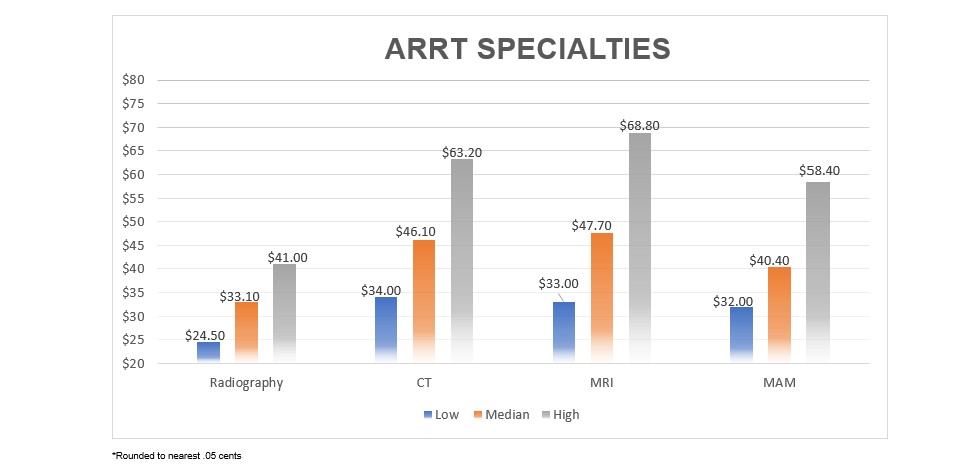
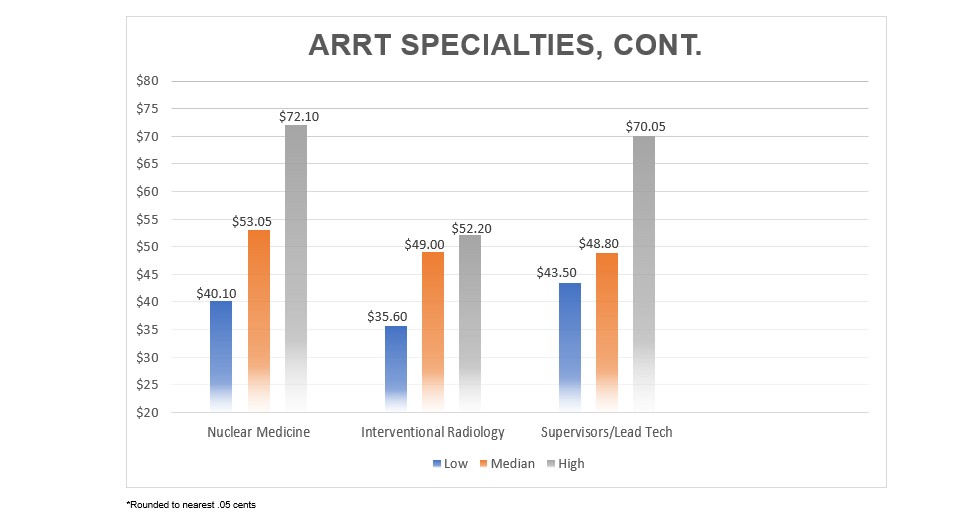
In 2025, for a third consecutive year, we had the most requests to recruit CT Technologists and Radiologic Technologists. When reviewing these pay rates, it is important to understand that the highest rates are generally offered to senior level technologists with twenty or more years of experience, and the lowest rate generally represents a technologist who is new to the field of medical imaging. Here is a breakdown of the most requested ARRT searches by our clients.
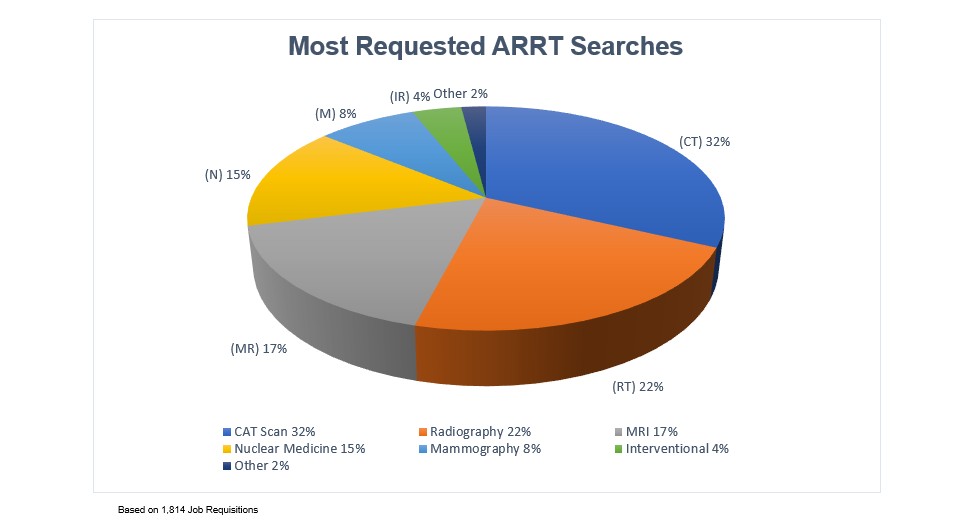
Notably, 54% of recruiting requests were for Computed Tomography (CT) and Radiography (R), with Magnetic Resonance Imaging (MR) technologists close behind with 17%. This trend has remained fairly consistent over the past five years, and we do not expect demand for these three modalities to change in 2026.
Sonography
Interestingly, the overall number of recruitment requests we have received for general sonographers has continued to decline. However, we did see an increase in job requisitions to recruit cardiac sonographers. Conversations with new graduates across the country suggest growing concerns about this trend. We speak to newly trained sonographers daily, and the concern about finding a job in their immediate service area is very real. One possible explanation is the increasing number of ultrasound training programs in certain regions. The states with the most ultrasound schools are California, Texas, Florida, New York, Ohio, and Pennsylvania. For new sonographers trying to find their first job in these areas, it can be a real challenge.
While RSG Health Services believes a career in ultrasound is still a great option, diversifying your skills in all areas of ultrasound (general studies, vascular, cardiac) and being flexible with your working hours might be necessary in order to find employment. Those who are looking for jobs offering bankers’ hours with no on-call, might struggle to find these jobs in certain areas.
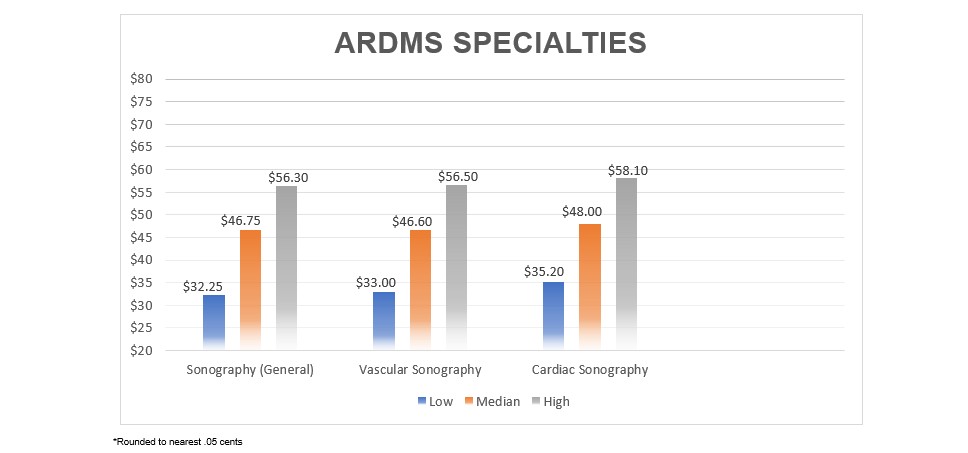
From what we have seen over the years, those who practice general ultrasound are usually the most in demand. This has been true for as long as we have been tracking compensation data. Sonographers who have the flexibility to perform procedures such as abdomen, pelvic, Ob/Gyn, breast, basic vascular studies, and small parts will typically have more options for employment than someone who specializes in a single area of sonography. While we understand that many sonographers like to specialize in areas such as vascular, echocardiography, and MFM, from an employment options standpoint, these jobs are not nearly as abundant.
In general, for smaller hospitals, having a sonographer with a broad range of skills is highly beneficial. Requests for specialists in vascular or cardiac ultrasound typically come from specialty clinics or large medical centers with dedicated echocardiography and vascular labs. These types of facilities represent only a small portion of our client base.
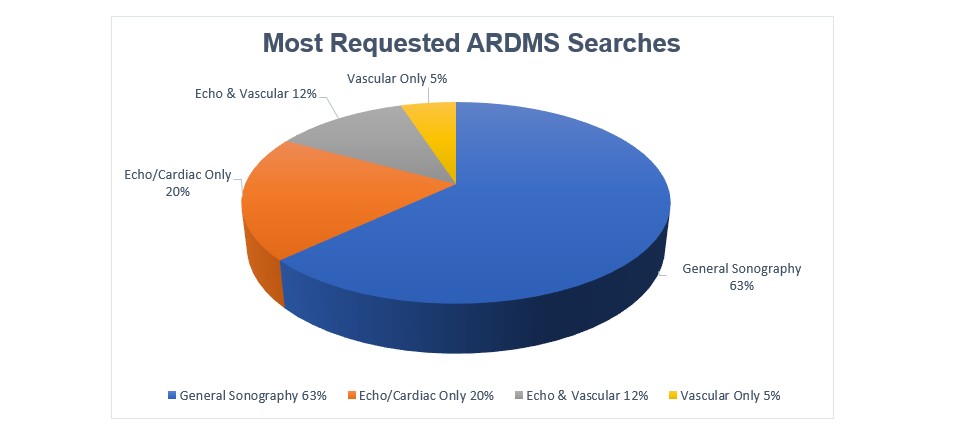
Here is a breakdown of the most requested ARDMS searches by our clients.
Regional Differences in Medical Imaging Compensation
RSG Health Services does not report compensation data at the individual city or state level. While we recognize the value of this level of detail, data availability can vary significantly by state. For instance, Wyoming has only about 28 hospitals, whereas Florida has more than 300. In 2025, much of our work was concentrated in southern states such as Texas, Florida, North Carolina, South Carolina, Georgia, New Mexico, and Missouri, which means our compensation analysis may be more reflective of these regions. We also maintain a strong presence in states like California, Ohio, Illinois, and Colorado.
In higher cost states such as California, New York, Virginia, and Washington, wages are generally higher. However, so are expenses like rent, taxes, and daily living costs. While salary is an important factor when changing jobs, it’s just as important to evaluate the overall cost of living. In some cases, earning less in a different state can still lead to an improved standard of living. For instance, lowering a monthly mortgage payment from $5,000 to $2,500 when moving from Washington, D.C. to Gainesville, Florida results in $30,000 in annual savings, even before considering additional reductions in taxes, fuel, and other expenses. In this example, earning $60 per hour in D.C. could translate to a comparable lifestyle at roughly $14 less per hour in Florida.
Relocation, Bonuses and Other Incentives
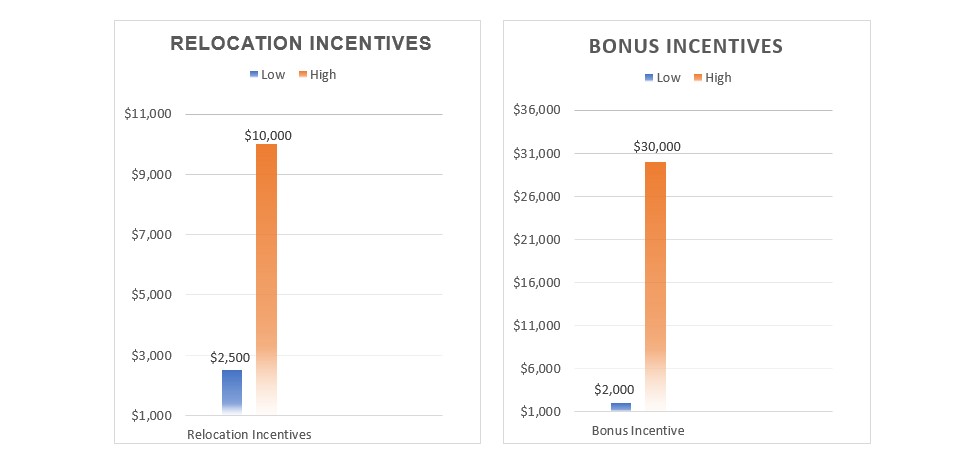
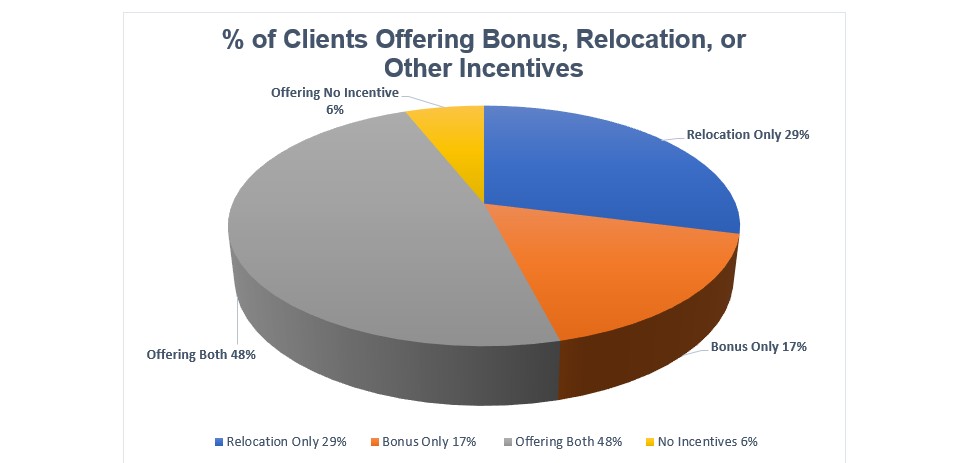
Sign-on bonuses may not carry the same appeal they once did, but they remain a significant component of many compensation packages. It is fairly common for organizations to offer between $5,000 and $10,000 as a “sign-on bonus.” However, in most cases, these bonuses are more of a retention bonus rather than a true sign-on incentive. That said, they still provide meaningful value. A $10,000 bonus equates to about $4.81 per hour when spread over a twelve-month period. However, most bonuses are not fully paid at the start of employment, despite the name. They are usually paid out in installments over a period of twelve to twenty-four months. By accepting these payouts, this will require the new hire to stay with the employer for a specified period or they will have to repay the incentive. This might include offerings of a relocation package as well. It’s important to discuss these things with your HR professional at the facility to determine what your obligation will be to receive these funds. To be clear, these available payments are voluntary and do not have to be accepted. If they are not accepted, then there is no contract that needs to be signed, and you can leave the job at any time without the fear of having to repay a sum of money.
Relocation and bonuses can sometimes be more negotiable than the pay rate itself due to the ol’ “internal equity” justification that employers give us on a regular basis. Essentially, they are implying they cannot offer a new hire more than an existing employee because that might upset someone in the department, should they find out. Relocation is a bit more self-explanatory. Bids can be obtained from moving companies and negotiated accordingly, if needed. Bonuses are discretionary, and some employers are more willing to negotiate this rather than the actual wage. Many times, bonuses are just a way for the employer to sweeten the job offer and provide the new hire with additional monetary resources that might be needed when making a move.
Repayment Agreements in Medical Imaging
As a standard practice, employers typically require an employee to sign a repayment agreement when offering relocation assistance and/or bonuses. These agreements allow the employer to recover those discretionary payments, often through payroll deductions, if an employee leaves before completing the agreed-upon term. In some cases, employers prorate the repayment amount, giving credit for the time already worked. While terms vary by organization, most agreements span one to two years and generally apply to both relocation assistance and bonuses. Outside of these agreements, employees are free to leave at any time. Under U.S. labor law, employment is generally “at-will,” meaning employers may terminate employees at any time, for any lawful reason, and without prior notice.
Medical Imaging Travel Technologists
While RSG Health Services specializes in providing permanent placement recruitment services, not temporary staffing, our team speaks to imaging providers in the travel sector daily. From 2020 to 2024, the travel sector was a goldmine for many who were able to be on the road for months at a time. However, in the last two years, we’ve seen many providers come off the road for a variety of reasons. Notably, the two biggest complaints have been declining contract wages and increasing temporary housing costs. While making $3,000 a week sounds great, when you factor in rising costs in almost every sector; high rent, taxes, and lower contract rates, some imaging providers feel it is just not worth being away from home.
Work/Life Balance in Medical Imaging
While compensation is often one of the first topics we are asked about, it is not always the top priority for some job seekers. More often, candidates place greater importance on work schedules and hours. Many recognize that the industry has become demanding and stressful, and ultimately want to feel satisfied with their employer, coworkers, and daily routine.
That said, evaluating a prospective employer can be challenging. While hiring managers may present their organization positively, it can be difficult to know what the reality will be. In some cases, the only concrete details you can rely on are the pay rate and the expected schedule. If an employer emphasizes the need for “flexibility” because things frequently change, and schedule stability is important to you, that may be a red flag. While occasional flexibility such as covering for a colleague is reasonable, it is important to read between the lines and not be swayed solely by higher pay. Work/life balance is more important than ever, yet not all organizations are able to provide it. For this reason, it is essential to do your due diligence before accepting a position. Ask to do a peer interview with a couple of your potential co-workers to gauge their attitudes and disposition. You might be surprised by what they will tell you about the department.
A slightly higher wage does not guarantee job satisfaction. In fact, we often see medical imaging professionals leave higher-paying roles for lower-paying ones due to lack of support, heavy workloads, and feeling undervalued. As highlighted in our article, “Work/Life Balance for the Win,” factors such as manageable workloads, time off, and a consistent schedule are often the most important considerations for those seeking new opportunities.
Economic Conditions Affecting Medical Imaging Jobs
As of this writing, the U.S. labor market in the first quarter of 2026 seems stable. According to the BLS, unemployment rose slightly to 4.4% in February 2026, with the number of unemployed individuals increasing to 7.57 million. According to the BLS, the U.S. healthcare labor market in Q1 2026 continues to play a vital role in overall economic growth, adding more than 82,000 jobs in January alone, accounting for roughly two-thirds of all new U.S. jobs. However, the sector experienced its first contraction in over four years in February, losing 28,000 jobs due to labor strikes and a shift toward outpatient and home health services.
Artificial Intelligence (AI) and Medical Imaging Jobs
According to some experts, artificial intelligence is set to significantly reshape the role of medical imaging technologists over the next few years. AI will increasingly handle repetitive, data-intensive tasks such as image analysis, quality checks, workflow prioritization, and scan optimization. This will allow imaging departments to operate more efficiently and process higher patient volumes. However, rather than replacing technologists, AI will function as a powerful support tool, augmenting their capabilities and enabling faster, more accurate decision-making.
As a result, the technologist’s role will likely evolve from primarily operating imaging equipment to managing and collaborating with intelligent systems. Technologists will be responsible for ensuring image quality, validating AI-generated findings, troubleshooting complex or uncertain cases, and coordinating with radiologists and care teams. Human skills such as patient positioning, communication, safety judgment, and adapting to unique clinical situations will remain essential.
Job impacts will likely be more about transformation than loss. While many technologists might disagree with some of this, at this time the demand for imaging services continues to grow, and new roles are emerging that blend imaging expertise with AI and informatics. Imaging professionals will need to adapt. Technologists who develop AI literacy and adapt to new workflows will be well-positioned for these changes, while those who do not may face increased pressure. All this said, many experts believe AI will elevate the profession into a more technical, analytical, and patient-centered role rather than replace it.
About RSG Health Services
RSG Health Services is a medical imaging recruiting firm focused on working with healthcare professionals in the radiology sector. RSG Health Services has been in business for over 25 years and can provide you with competent representation on your next job search to help maximize your time and efforts finding suitable employment. At RSG Health Services, we believe specialization sets our organization apart from the hundreds of other firms that operate in the same healthcare space. We hope the information provided in this compensation review is helpful and informative.
Copywrite 2026 by RadSciences Group, LLC. All rights reserved.


1 comment
Vicki Arguello
Do you have more detailed information about the south / Alabama / Mississippi/ Panhandle of Florida MFM Salaries ?